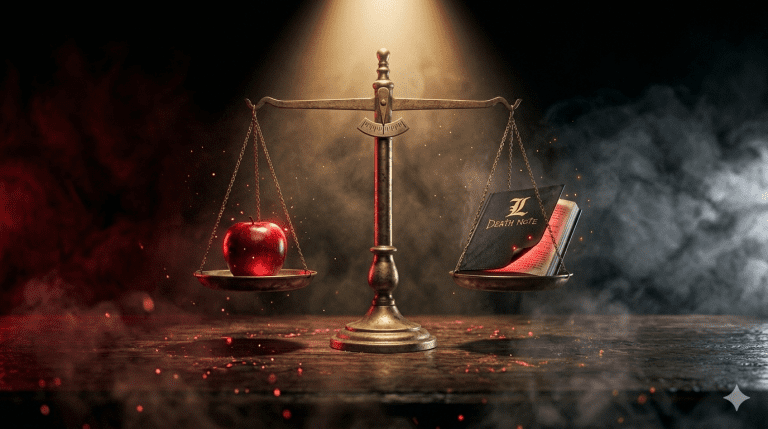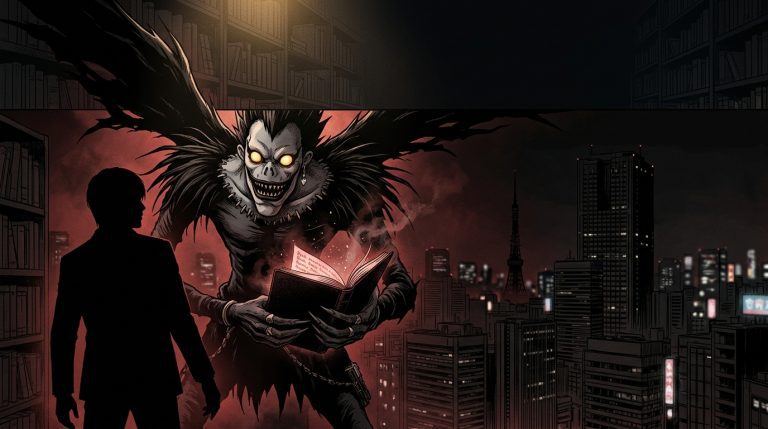
Few characters in anime history have sparked as much debate as Light Yagami Villain or Anti-Hero — the genius high school student who finds a supernatural notebook capable of killing anyone whose name is written in it. From the very first episode of Death Note, viewers are pulled into a fascinating moral maze: Is this guy a hero cleaning up the world’s filth, or is he a cold-blooded killer drunk on power?
The answer isn’t as simple as you might think — and that’s exactly what makes Death Note one of the greatest psychological thrillers ever written.
The case for Light Yagami Villain or Anti-Hero
Let’s start with the argument that Light is, at his core, an anti-hero. When he first picks up the Death Note, his motivations are not entirely selfish. The world is plagued by criminals — murderers, rapists, serial killers — people the justice system has failed to punish. Light sees an opportunity to fix that, and he takes it.
In the early episodes, you can genuinely sympathize with him. Crime rates drop globally because of Kira. People begin to feel safer. Entire communities worship him. Even law enforcement admits, quietly, that violent crime has decreased. By conventional utilitarian logic — the greatest good for the greatest number — Light’s plan is working.
“Anti-heroes are defined by doing bad things for good reasons. At the start of Death Note, Light genuinely fits that bill — morally grey, conflicted, and carrying a cause.”
Anti-heroes throughout fiction — Walter White, Tony Soprano, Macbeth — share one defining trait: they start somewhere relatable. Light starts as a bored, brilliant student who is deeply frustrated by injustice. That frustration? Most of us have felt it. His methods are extreme, but his initial goal — a world without evil — is one we’ve all imagined.
Where he crosses the line
Here’s where it gets complicated. The moment Light kills Lind L. Tailor — a man who was not even a criminal, just a decoy used by the real L — something shifts. Light’s mask slips. He doesn’t pause. He doesn’t feel guilt. He just recalibrates and moves on.
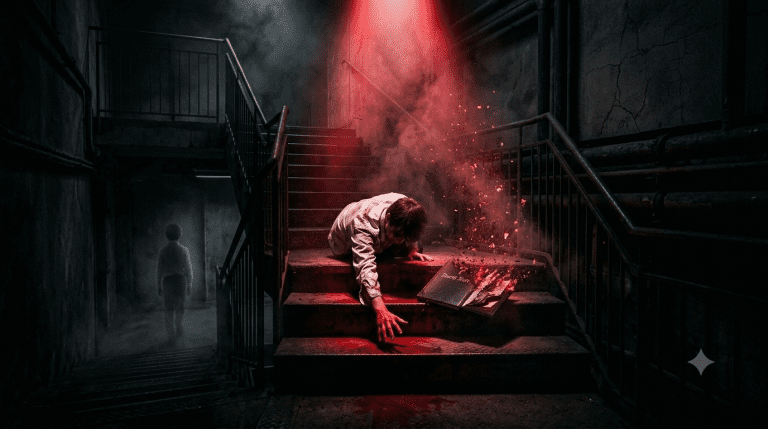
From that point, Light begins eliminating anyone who threatens his plan: FBI agents, witnesses, even his own allies. When he engineers the death of Naomi Misora — an innocent woman who got too close to the truth — there is no moral justification left. She wasn’t a criminal. She was just in the way.
And then there’s perhaps the most chilling line in the entire series. When Light finally reveals himself to Near and says, “I am the god of the new world“ — you realize this was never really about justice. It was about power. The Death Note didn’t corrupt Light. It revealed him.
The Argument — Side by Side
Anti-Hero Case
- Reduced global crime rates
- Targeted genuinely guilty criminals
- Motivated by frustration with injustice
- Initially conflicted about killing
- Had a clear moral vision
Villain Case
- Killed innocent people as collateral
- Manipulated and used allies
- Developed a god complex
- Lost empathy completely over time
- Justice became a self-serving lie
What the creator intended
Tsugumi Ohba, the writer of Death Note, has stated in interviews that Light was always meant to be the villain of the story — even if readers root for him. The narrative is deliberately designed to seduce you into agreeing with Light’s logic before pulling the rug out from under you. L is framed as the obstacle, the antagonist — until you step back and realize: L is actually the hero trying to stop a serial killer.
Death Note is a masterclass in unreliable perspective. We live inside Light’s head, we hear his justifications, we watch his genius at work — and so we forget, for long stretches, that he is murdering people. That’s the genius of the writing.
The real answer
Here is the uncomfortable truth: Light Yagami starts as an anti-hero and ends as a villain. The trajectory is the point. Death Note is not asking you to pick a side — it’s asking you to watch what happens when a person with good intentions is given unlimited, unchecked power with zero accountability.
The lesson isn’t that Light was always evil. It’s that the road from idealism to atrocity is shorter than we think — and that the most dangerous kind of villain is one who genuinely believes they are the hero.
Starts as an Anti-Hero. Ends as a Villain.
That’s what makes Light Yagami one of the most unforgettable characters in manga history — not because he’s purely evil, but because he made us question ourselves. How long did you root for him? That answer says more about the writing than anything else.
Death Note is available to read on Viz Media and to stream on Crunchyroll and Netflix.