Published: July 2026 | Category: Blog | Reading Time: 11 min
Death Note rules explained in one place, finally. If you’ve made it through even a few chapters of Death Note, you already know the premise: write a name, someone dies. Simple, right?
It isn’t. Not even close. The full death note rules explained list is scattered across page margins, footnotes, and one very dense in-universe guidebook, and once you actually put them together, you realize how much of the story only works because of them.
Some of these rules are real. Some were invented on the spot by Light Yagami to throw off the police. And a few are so oddly specific that fans still argue about what they mean, nearly two decades after the series ended. Below, death note rules explained clearly — what’s real, what’s fake, and what actually happens the moment a name gets written down.
How Does the Death Note Work? The Core Mechanic
So how does the Death Note work at its most basic level? The notebook kills a human being whose name is written on its pages, as long as the writer pictures that person’s face while writing. That single condition — name plus face — is what stops the notebook from being pure chaos. Without a clear mental image of the person, nothing happens, which is why identical names don’t cause accidental deaths.
Write nothing else, and the person dies of a heart attack roughly forty seconds later. Fans often call this the death note 40 second rule, and it’s paired with what’s probably the single most quoted line item on any death note rules explained list: the death note heart attack rule, which is the notebook’s default outcome whenever no other cause of death is specified.
That default matters more than it seems. It’s the fallback the story keeps returning to, and it’s also the one investigators eventually use to build a profile of Kira’s method — a wave of unexplained cardiac arrests among criminals isn’t exactly subtle.
The Cause and Circumstances of Death
This is where the notebook rules stop being a blunt weapon and start acting like a scripting tool. After the name, the user has 40 seconds to add a cause of death. Get specific enough, and the notebook will engineer that exact outcome — a car accident, a fall, a fire — as long as it’s physically achievable for that person in that moment.
Add details of the circumstances after the cause, and the writer has six minutes and forty seconds to finish them. This is the mechanic behind some of the story’s most elaborate deaths, and it’s also the loophole Light Yagami exploits again and again to stage suicides, accidents, and cover stories that never trace back to a notebook.
There are limits, though. The notebook can’t force something physically impossible — you can’t write a death by dragon attack and expect results. And there’s a hard ceiling on how far into the future a scripted death can occur: roughly 23 days from the moment the name is written. Miss that window with an incomplete or unrealistic cause of death, and the person dies of a heart attack anyway once the clock runs out. This is what fans call the Death Note 23 day rule, and it’s one of the few limits that holds up consistently across the entire series.
Death Note Ownership Rules: Transfer, Memory, and Losing the Notebook
A Death Note doesn’t stay with one owner forever, and the death note ownership rules are almost as important as the killing mechanic itself.
Ownership can be transferred, sold, or given away freely, and whoever currently holds the notebook is bound by its rules whether they understand them or not. If the notebook changes hands — through theft, gift, or death — the human memory of ever having owned it can be traded away too. This is the death note memory loss rule, and it becomes a major plot mechanic later in the story, letting a character walk away from suspicion by genuinely forgetting they were ever involved, only to have those memories return if they touch the notebook again.
There’s also a quieter rule that shapes the entire back half of the story: a human who has used a Death Note cannot go to either Heaven or Hell after death, according to the shinigami who explain the notebook’s origins. It’s never dwelled on for long, but it hangs over every major character who picks the notebook up.
The Shinigami Eye Deal – Death Note Rules Explained
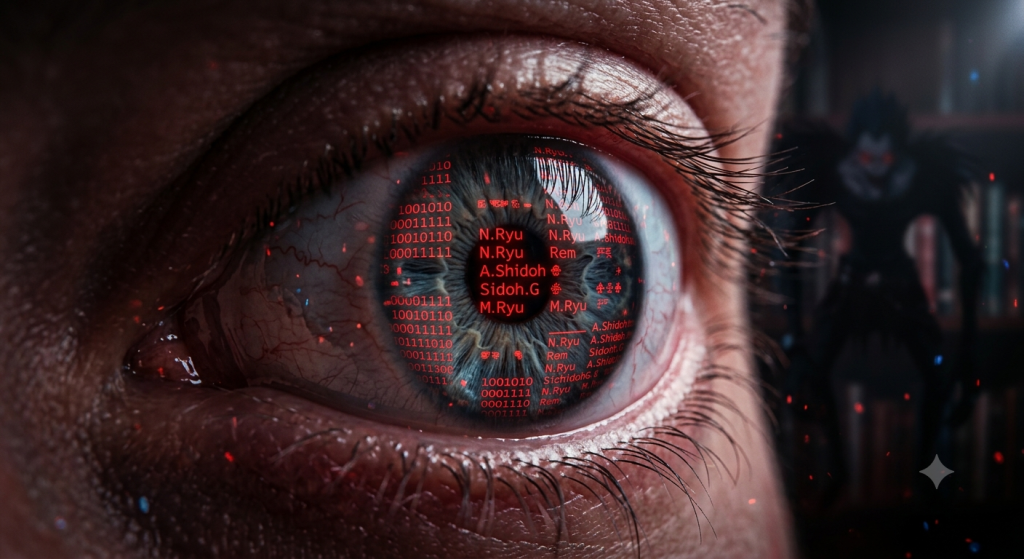
One of the most talked-about entries on any death note rules explained breakdown is the eye trade. A shinigami can offer their human owner a deal — half of that person’s remaining lifespan in exchange for “shinigami eyes,” which let the user see a stranger’s real name and remaining lifespan just by looking at their face.
The shinigami eyes trade sounds like a shortcut to godhood, and for a while it functions like one. But the price is exactly what it says: half of whatever life the person has left, calculated the instant the deal is made, not half of a “normal” lifespan. It’s a deal several characters consider and reject once they understand what it actually costs, and one character’s willingness to accept the shinigami eye deal says a lot about how far they’re willing to go.
More Rules of the Death Note Manga
Beyond the core mechanics, the rules of the death note manga include dozens of smaller, stranger conditions:
- Misspell a name incorrectly enough times and the target becomes permanently unkillable by that notebook.
- A shinigami who dropped their notebook into the human world can’t tell their owner how to use it unless directly asked — which is why so much of the early story is Light and Ryuk playing twenty questions.
- Multiple people can share ownership of one notebook without knowing it, and pages can be torn out and used independently of the notebook they came from.
- A human’s remaining natural lifespan sets a hard limit on how the notebook can be used against them; you can’t extend someone’s life with it, only end it early.
Individually, most of these read like legal footnotes. Together, they’re the reason Death Note works as a mystery instead of a simple horror premise — every death has to fit inside a system, and every investigator eventually starts reverse-engineering that system from the outside.
Death Note Fake Rules: What Light Actually Made Up
This is the part casual viewers usually miss. Partway through the story, Light convinces Ryuk to write a set of death note fake rules into the notebook — rules designed specifically to mislead the police and clear Light and Misa of suspicion during a period when they’re both under direct surveillance.
These fabricated kira death note rules explained include false claims about how ownership works and false limitations meant to make Light’s own behavior look inconsistent with being Kira. It’s a small moment in the story, but it’s a good example of what makes Light dangerous in the first place: he doesn’t just use the real rules better than anyone else, he weaponizes people’s trust in rules as a concept.
If you’ve ever seen a death note rules list online that contradicts another list, this is usually why — some sources mix the real rules with the ones Light deliberately faked.
Why the Rules Matter More Than the Kills
It would be easy to read all of this as trivia, but the death note notebook rules are the actual engine of the story. Death Note isn’t tense because people die — it’s tense because every death has to be legally possible within a system that both Light and L are trying to reconstruct from opposite sides. L spends the first arc profiling Kira almost entirely through rule inference: what’s possible, what isn’t, what a “heart attack” death implies about how much information the killer needs.
That’s a rarer kind of thriller than it looks like at first glance. The mystery isn’t hidden behind red herrings. It’s hidden in plain sight, inside rules the audience is shown from chapter one and has to actually remember.
Frequently Asked Questions
Want more Death Note breakdowns? Check out our complete Death Note manga guide, L vs Light: who’s actually smarter, or the ending explained.